Thrifting Vintage Speakers
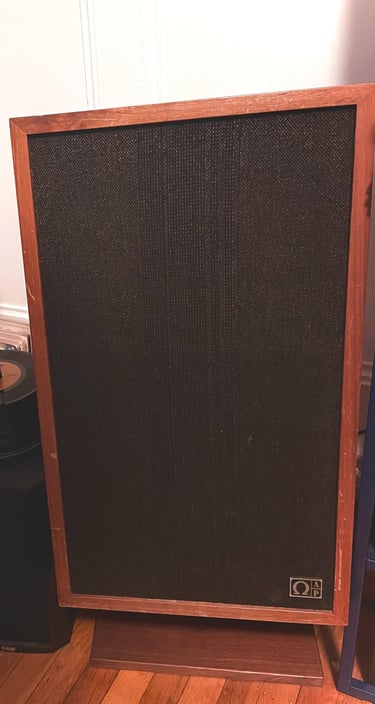
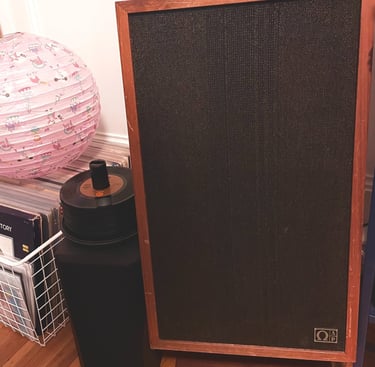
God, who doesn't love a bargain? Back in college I snagged these vintage monitors, Omega Model 150 for 50 bucks from a thrift store. Vintage gear has a sense of craftsmanship and quality you don’t always get today.
Make sure to check out the following before your purchase:
Foam surrounds — The soft ring around the woofer often rots. If it’s flaky or missing, you’ll need a refoam kit (easy DIY).
Cabinet condition — Avoid water-damaged boxes or cracked veneer.
Terminals — Specifically, older spring-clip connectors may need cleaning or adapters.
Research the model — A quick search can tell you if it’s a gem or garage filler.
Check if they've been tested.
Here’s how to hook 'em up:
Amplifier: Most vintage speakers need a proper amp or receiver, not a Bluetooth speaker output.
4–8 Ω support usually covers the lot. However, double-check the Ω requirements of your speakers to avoid blowing them out.
Speaker wire: Standard 16- or 18-gauge wire works, but always double-check if you need something with a more specific gauge. Strip the ends, and match red to red, black to black. Connect the speaker to your amp!
For short distances (under ~25 feet) and normal home listening, CCA is usually fine.
For longer runs, higher power amps, or critical listening, stick with pure copper wire to preserve sound quality
Wire Terminals
Vintage speakers might have:
Spring-clip terminals – Small plastic or metal clips you push down to insert stripped wire. Common on thrift-store finds but not my favorite and not the most reliable reflection of quality.
Binding posts – Screw-style posts that accept bare wire, banana plugs, or spade connectors. More secure and often found on higher-end vintage speakers.
Bare wire only – Some older units only take bare stranded wire; you’ll need to strip about ½ inch of insulation before connecting.
Alligator clips – Simply clamp onto bare wire. Not fancy, but functional.
C-shaped terminals – Old-school metal loops or tabs shaped like a “C” that hold the wire when you tighten a screw or tab.
Final Tips:
Make sure you've got the right wire gauge and the right terminals. Secure them tightly or else you might distort your sound quality.
Banana plugs or spade connectors can often adapt to spring, binding, or C-terminals if you want a cleaner setup